






mRNA Vaccine Delivery Using Lipid Nanoparticles
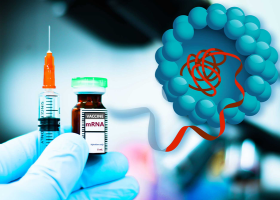
Revolutionizing Modern Immunization Through Nanotechnology
The rapid development of mRNA vaccines during the COVID-19 pandemic marked a historic milestone in biomedical science. A key innovation behind this success was the use of Lipid Nanoparticles (LNPs) — tiny delivery vehicles that protect and transport fragile mRNA molecules into human cells.
🧬 What is an mRNA Vaccine?
An mRNA vaccine contains messenger RNA that instructs cells to produce a specific viral protein, triggering an immune response without using a live virus.
Two globally recognized mRNA vaccines include:
- Pfizer-BioNTech COVID-19 vaccine
- Moderna COVID-19 vaccine
- Both target the spike protein of SARS-CoV-2.
🧪 Why mRNA Needs a Delivery System
mRNA is:
- Highly unstable
- Easily degraded by enzymes (RNases)
- Negatively charged (cannot easily cross cell membranes)
Without protection, it would be destroyed before reaching its target cells. This is where Lipid Nanoparticles (LNPs) become essential.
🧫 What Are Lipid Nanoparticles (LNPs)?
Lipid Nanoparticles are nanoscale spherical vesicles (typically 80–120 nm in size) composed of specially designed lipids. They:
- Encapsulate and protect mRNA
- Facilitate cellular uptake
- Promote endosomal escape
- Enhance stability and delivery efficiency
🔬 Composition of LNPs
LNP formulations typically contain four major components:
Ionizable Lipids – Bind to mRNA and assist in endosomal escape
Phospholipids – Structural support
Cholesterol – Membrane stability
PEGylated Lipids – Improve circulation time
These components self-assemble with mRNA to form stable nanoparticles.
🚀 Mechanism of Delivery
Injection – Administered intramuscularly.
Cellular Uptake – LNPs enter cells via endocytosis.
Endosomal Escape – Ionizable lipids become positively charged in acidic endosomes, releasing mRNA into the cytoplasm.
Protein Translation – Ribosomes translate mRNA into viral spike protein.
Immune Activation – The immune system recognizes the protein and produces antibodies and T-cell responses.
🌍 Breakthrough During the Pandemic
During the global spread of COVID-19, LNP-based mRNA vaccines demonstrated:
- High efficacy rates
- Rapid development timelines
- Scalable manufacturing
- Strong safety profiles
This success has opened pathways for mRNA-based vaccines against influenza, cancer, and other infectious diseases.
⚖️ Advantages of LNP-Based mRNA Vaccines
- Non-infectious and non-integrating
- Rapid design and modification
- Strong immune response
- Suitable for large-scale production
⚠️ Challenges and Limitations
- Cold-chain storage requirements
- Potential inflammatory responses
- Complex formulation optimization
- High initial development cost
Researchers continue improving lipid chemistry to enhance stability and reduce side effects.
🔮 Future Perspectives
Lipid nanoparticle technology is not limited to vaccines. It is being explored for:
- Cancer immunotherapy
- Gene editing delivery systems
- Protein replacement therapy
- Personalized medicine
Nanotechnology-driven drug delivery platforms are shaping the future of biomedical innovation.
📌 Conclusion
The combination of mRNA technology and Lipid Nanoparticles represents one of the most significant advancements in modern medicine. By solving the delivery challenge, LNPs transformed mRNA from a promising concept into a life-saving global solution.
For students and researchers in nanotechnology, biotechnology, and pharmaceutical sciences, LNP-based vaccine delivery stands as a powerful example of translational nanomedicine in action.
Comments
Latest TrendReshmathiya U
04 Apr 2026Provides critical information about the nanoparticles.A Good one !
Keerthi V
04 Apr 2026Highly informative session
Fathima Rafieah.N.T
04 Apr 2026Very informative article on the role of lipid nanoparticles in mRNA vaccine delivery.
Poonam Hariyani
04 Apr 2026Lipid nanoparticle technology is now the part of biomedical field and it shows how essential is this in modern science and in future perspective.
Sharanya basu
04 Apr 2026This blog does a great job explaining how lipid nanoparticles changed the game for mRNA vaccines. Nanotech is really pushing boundaries in healthcare. It is extremely informative and helps students to comprehend and understand the concept of nanotechnology in Medicine lucidly.
M.Kiran
04 Apr 2026This blog was highly informative.It gave a gist of knowledge about application of Nanotechnology in medical science.
Sumitra Punia
04 Apr 2026The blog shows the importance of LNPs in the body
Upasna Saini
05 Mar 2026This blog provides extensive information on nanoparticles and nanotechnology, which is very beneficial for students.
Upasna Saini
05 Mar 2026This blog gives us complete information about green synthesis and its advantages.
Sreya K J
05 Mar 2026Very informative article on an efficient method of vaccine delivery which can be a solution to various life saving problems globally
komuni.k
04 Mar 2026this blog gave information about lNPs leading to better understanding of its advantages and challenges. specifically the role played by LNPs in mRna vaccine.
USHASI MUKHERJEE
04 Mar 2026This was very informative and helped me better understand how lipid nanoparticles protect and deliver mRNA into cells. It clearly shows how nanotechnology is contributing to next-generation vaccines and biomedical innovations.
piu Bhowmik
04 Mar 2026It’s incredible how something so tiny like lipid nanoparticles played such a huge role during a global pandemic. This article beautifully explains the science behind it in a simple way. Truly inspiring for students interested in nanotechnology and biomedical research.
Neha bhandhari
04 Mar 2026This blog provides An excellent overview highlighting how lipid nanoparticle technology has revolutionized mRNA vaccine delivery and modern immunization strategies. This clearly demonstrates the powerful role of nanotechnology in advancing next-generation therapeutics and global healthcare solutions
Muthu kumar sampath
04 Mar 2026LNP nanopaeticles have been used to coat the mrna vaccines for efficient drug delivery
Muthu kumar sampath
04 Mar 2026LNP nanopaeticles have been used to coat the mrna vaccines for efficient drug delivery
Zeenat Parveen
04 Mar 2026This is a very informative and well-structured article on the role of lipid nanoparticles in mRNA vaccine delivery. The explanation of how LNPs protect fragile mRNA molecules and facilitate cellular uptake is particularly insightful. The discussion on advantages and limitations also provides a balanced perspective on this emerging nanotechnology-based approach. Such articles are very helpful for students and researchers working in the fields of nanotechnology, biotechnology, and pharmaceutical sciences.
Aditi Pareek
04 Mar 2026This blog provides an important application of nanoparticles that is in drug delivery. this helps in pharmaceutical industry.
Dr. A. Mahadeva
04 Mar 2026it is an bird eye view of the complete nanotechnology of mRNA along with lipid nanoparticles
Vidhi
04 Mar 2026I especiallyappreciated how the article connects advanced nanotechnology with real-world medical applications, demonstrating how interdisciplinary science can accelerate vaccine development. Overall, it is an informative piece that helps readers better understand the science behind modern vaccines and their potential for future therapeutic innovations.